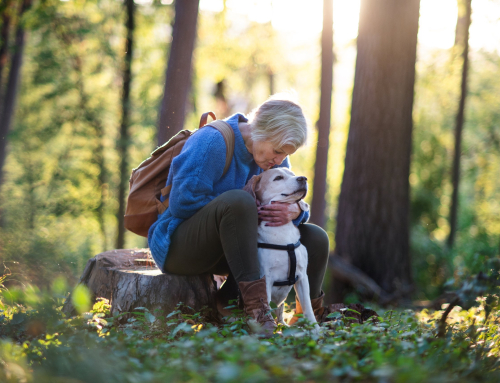
My family and I just spent Spring Break in majestic Big Sky, Montana where we enjoyed all the wonders of snow country. Big Sky is definitely a dog friendly community. Dogs are welcome on almost all trails, and many can be found romping off leash in open fields. They are even allowed in local stores to receive welcoming dog cookies. Needless to say, my dogs enjoyed this vacation as much as I did.
Everywhere we went, my dogs experienced friendly, on leash dog-to-dog greetings, or were able to run and play with other dogs living the life of being off leash, casually walking with their owners. It was an amazing sight to see, until I looked a little closer at the dogs we encountered each day. If the dogs were smaller “house” dogs, they were almost always on leash. But if the dogs were the rugged “outdoorsy” type that you’d expect to see in Montana, almost all of them were wearing electronic shock collars (e-collars).
To be honest, never before have I met so many dogs wearing e-collars and enjoying the great outdoors.
When I headed out with my dogs, my little “house dog” was on a regular leash, but my more active dog was usually on a 20 foot long line. This was for two reasons; she has a ton of energy and enjoys running around me in the snow, but I also didn’t trust her in this new environment with the potential for wildlife encounters. As we walked, at times I let my little dog off leash in an open field, or I dropped the long line for my larger dog so she could easily play and run with her new friends. It worked great for both of them and didn’t present a problem.
But this dichotomy of dogs either on leash, or wearing an electronic shock collar was really nagging at me.
All the dogs we met seemed to have lovely temperaments and the e-collars seemed to be working as intended for the dogs to be off leash. The dogs didn’t wander too far ahead, didn’t get distracted by unknown critters, and came when called. However, the use of these collars goes against everything I know to be most humane when training dogs. Furthermore, I believe dogs that wear e-collars grow to be pessimistic and fearful about life. They learn to be fearful of making a mistake, often getting shocked in doing so. All to often, people reach out to me because the intent of a shock collar backfired, causing more behavioral problems in other areas of a dog’s life.
Again, to be honest, it wasn’t always easy walking through the woods with my dogs on leash, especially when everyone else had theirs off leash!
Even when out walking with my husband (who shares in my training philosophy), he commented that he’d rather be able to go for a peaceful walk without having to do any training or say anything to our dogs along the way. Instead, we were trying not to get tangled in long lines when redirecting our dogs, reinforcing amazing recalls with amazing treats, and throwing snowballs for our dog to catch, all so she would remember that staying with us is just as much fun as exploring the new environment. We didn’t walk as far as we had anticipated that day, but in that single walk, our dog did some amazing recalls, improved on waiting up for us when she ran ahead, and decreased her desire to chase random cars (which she only does in Montana!).
If we want our own dog to be off leash in this type of environment in the future, we need to put in some simple, fun training now.
I get it, pushing a single button once in a while is quick and easy, but I don’t believe it’s in the best interest our dogs. I’m a Big Picture kinda gal, and in this instance, with these levels of distractions, giving dogs time completely off leash needs to be earned. As I continued taking my dogs Out N’ About each day, I worked with them by reinforcing proper choices. I must say, I saw an improvement in their behavior along the way. By the end of our trip, I know that my family and I helped our dogs grow optimism, enjoy all things dogs love to do in the snow, and learn how to safely explore new places and greet new dogs with an acceptable level of enthusiasm and restraint.
Our relationship with our dogs also improved because we spent quality time guiding, interacting, and laughing with them along the way. This, as they say, is priceless.