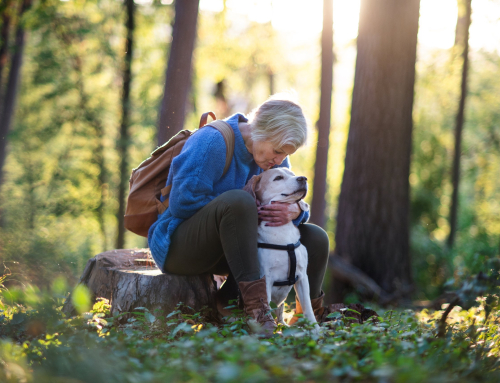
Dogs are amazing animals for a whole slew of reasons, but sometimes I believe we forget they are thinking, feeling animals as well. Now you may be reading this and saying to yourself, “Duh, I already know this.” But humor me for a moment.
As a professional dog trainer, I get asked by almost every person who reaches out to me “how many sessions will it take to train my dog,” or “how long will it take to train my dog.” I get it, we all want to know how much time, energy and money it will take to get the results we want. But if I could predict the correct answer to these questions, I would be a VERY wealthy person.
The key component here is that we are working with another sentient being who also has a say in how long the training will take, and they can’t always tell us.
So the answer I always give people is “it depends.” It depends on such things as the dog’s age, breed, previous learning history, and relationship with their owner. It’s similar to asking a therapist how long will it take to resolve a particular issue that is presenting a challenge. Sometimes it can take a handful of sessions, or it can take a lifetime, we just don’t know. But what we can say is that it’s a process.
I think the problem lies in our interpretation of the word “training.”
When we think of training, we think of a tangible beginning, middle and end to the training. We train to learn a job, ride a bike, or compete in a marathon. For dogs, we train them to sit, lie down, stay or come. But these are all mechanical skills that can be measured by the ability to produce a noticeable result within a specific timeframe.
When training our dogs, we also have to take into account emotional skills as well. Emotional skills refer to the ability to recognize, express and regulate your emotions.
Herein lies the real challenge. The improvement of emotional skills are hard to measure, especially when our dogs can’t talk to us. Furthermore we are dealing with emotional skills of both the dog owner and the owner, and they are both constantly changing, depending on the situation. To play this out further, here’s an example of an emotional skill. A child may have a general fear of sleeping in the dark. To combat this fear, their parents decided to make the child’s bed comfy and inviting, so they would want to sleep in it. However, the process of getting over this fear will impact the child’s ability to sleep in their own bed, no matter how comfortable and cozy the bed may be. The learning and “training” process to sleep in their room can’t be rushed or forced and needs to be managed in a way that brings comfort to the child, on their terms. The goal is that they learn to sleep in their own room when it is dark. The reality may be that they sleep in a different room with someone else, or they sleep in their own room with a dim light on. Over time (and we don’t know how MUCH time), and with appropriate guidance and practice, the child becomes more and more comfortable sleeping in their own room when it is dark.
Dogs require this same opportunity of managing, training, guiding, and learning, to achieve a specific result.
When you want your dog to act a certain way, in a certain environment, consider both the mechanical and emotional skills involved to help them learn along the way. By evaluating the specific situation, we can often gain important insight into the dog’s emotional state. This is how long-term, successful dog “training” is achieved.
If you ever get “stuck” and either don’t understand your dog’s emotional state, or don’t see any change in their behavior, contact a certified professional dog trainer for guidance.