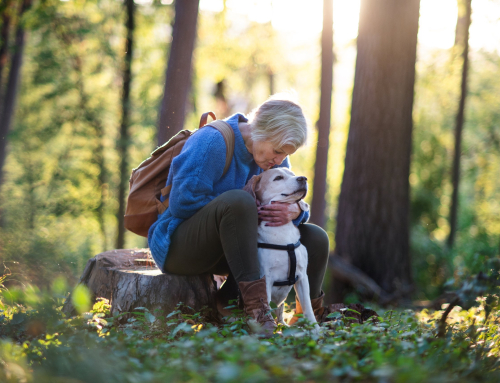
Being a parent has helped me be a better dog trainer. It has been within the last 19 years that my perspective about working with dogs has made a radical shift. When we think of training dogs, we often think of teaching them to sit, stay, lie down and basically to stop moving. But according to world renowned scientist and psychologist Stanley Coren, research has shown that “dogs have the mental ability approximating that of humans between 2 and 3 years of age” That means that if we are “teaching a task, which would be too difficult for a human 2 or 3-year-old to solve or learn, then it is likely to be beyond the dog’s capacity as well.” Source
Self-regulation is a challenge
For anyone who has been around toddlers, they are definitely not experts at sitting still. Their energy is boundless and is best met by creating opportunities for movement instead of insisting they be stationary. However, this energy can be channeled into safe learning activities that benefit all participants. Through the use of games, training and exercise, can all take place at the same time. Consider the following that I learned from my children:
Keep activities short – Games only need to be played for 3-5 minutes at a time. Set a timer on your phone and then take a water break when the time goes off.
Keep games simple – Those that involve a minimal amount of equipment and can be played anywhere are best. Think back to someone’s childhood before electronics and ask them what type of outdoor games they played.
Keep games fun – If you can promote a fast-paced game that gets the heart rate up and tires the mind as well, it’s another win-win. Let the learner (child or dog) determine the progression of the game and always end on a positive note where they still want to play more the next time.
Here are a few classics that can be played with dogs:
Hide and Seek – This game encourages dogs to use their natural instincts to hunt and forage. It can begin indoors where one person gently holds back their dog and another person “hides” themselves, a toy, ball, or treats about 4 feet away from the dog. Let your dog seek out the hidden object/person as you encourage them to “find it.” Continue to practice easy “hides” until your dog becomes more and more proficient at finding things. The game can easily be made more challenging, depending on a dog’s particular interest level.
Red light, Green light – This game teaches dogs to look toward their owner for permission to move and can be taught in a variety of different settings. The simplest way to begin the game is teaching a momentary pause when exiting a car or any room with a closed door. Begin by having your dog sit at the door and open it just slight enough that your dog can’t get through, then say “red light.” Wait until they look up at you, then say “green light” to let them move through the door. Each time you practice, try having the door open further and further before saying “green light.” The same can be taught when throwing a ball or toy, or even when going for a walk. The game can grow into using more traditional cues, such as “wait” and “go.”
King of the Mountain – This game teaches dogs improved balance and body awareness, and can be played anywhere. When out on a walk or in any new environment, look for any raised surface where your dog can jump upon it to receive a few treats. Park benches, logs, stumps, large decorative rocks, or boulders are just a few. If you can teach your dog to jump and balance upon designated items outside, they will be less inclined to jump upon undesignated items in the house.
By thinking of training dogs through the use of games, the activity becomes lighthearted. Our voice is more upbeat and encouraging, resulting in our dogs choosing to be with us because we are fun! So next time you are Out N’ About, observe how children play and learn and take cues from them on how to improve your relationship with your dog.