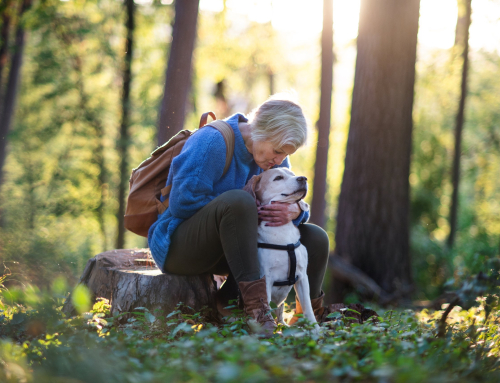
January was National Train Your Dog Month (https://trainyourdogmonth.com/tips) and looking back, I gotta say, this is a strange promotion to me. Dogs are learning ALL the time, just not always from us. I believe that if you own a dog, EVERY month is a train your dog month, the learning never stops. Furthermore, people often believe dogs only need to learn traditional obedience cues of sit, down, come, stay, heel. Let’s shake it up a bit and change the focus to other cues and behaviors that are truly integrated into our every day interactions with our dogs.
I would suggest changing the name to National Play With Your Dog Month, or National Teach Your Dog a New Trick Month.
These focuses seem less restrictive, more inviting, and more fun! And if you’ve read any of my past articles, that’s what I’m all about. In reality, traditional cues are not always the words that help our dogs when we feel things have gone sour. “Training” is really about engaging your dog’s mind and providing mental exercises they can complete in a variety of different locations.
Over the last 20 years of my training career, I’ve shifted my focus away from teaching obedience and more toward the power of games and tricks with dogs and their people. The number one reason for this shift is that people, especially kids, are more relaxed with this type of training and it is the simplest way to create more engagement between people and their dogs. In addition, games can be played and tricks can be practiced anywhere: on or off leash, on walks, in the house, and around other animals. Both of these exercises increase your dog’s repertoire of behaviors.
The more dogs learn (from their owner), the better they learn, and the more mentally connected they will be with the people with whom they live.
In the past, when I thought about “trick training,” that tiny, white, fluff of a dog came to mind. You know, the one that “sits pretty” or dances on their hind legs for a cookie. I also thought, “that silliness is just not for me.” Well, now I’m singing a new tune. Observing your dog, watching their natural behaviors and putting them on cue is really quite fun! They get to show you what they like to do and then you get to ask for it more often. It’s a win-win. Now with the assistance of YouTube videos and TikToks, there are terrific step-by-step resources at your fingertips.
If your dog becomes proficient at a few tricks or games, they not only become an excellent outlet for energy, but also help determine a dog’s stress or excitement level in a particular environment.
If your dog chooses not to perform their tricks or play a game that they normally love for food or a toy, take this as a signal to evaluate your dog’s environment. They are trying to tell you they are either not comfortable, or are too distracted to focus. Either way, they are not relaxed and a change in the environment is necessary. In other words, we need to move to a calmer location and try again.
As you interact with your dog, think of literally three different behaviors they reliably do and know. Three of my favorites are wait, get back, and spin. Grow and practice them in a variety of different places. Tricks and games are just portable “obedience” cues that are more fun for the dog and owner.
If you are at a loss of ideas for some easy and effective games and tricks, contact me today. Also, refer back to last months’ newsletter for online resources.